Research pathway

How field evidence reaches the website

  • Collect structured records through mobile forms, sensors, field observations, and community updates
  • Validate and combine agriculture, water, energy, aquaculture, waste, training, and livelihood data
  • Display maps, alerts, trends, site status, recent records, and partner indicators in one secure website
  • Use dashboards for community feedback, project decisions, reports, learning reviews, and adaptive management
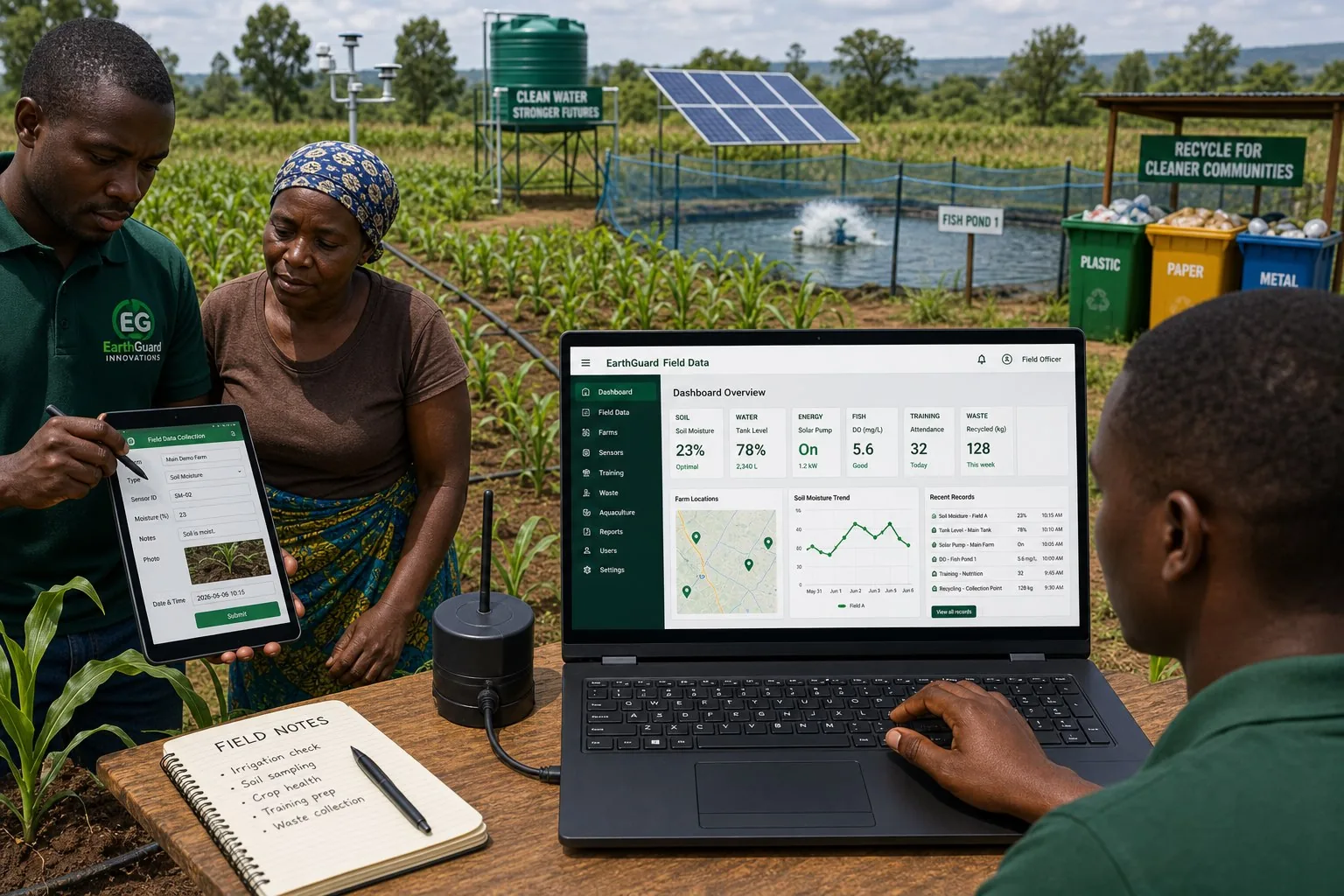
Field officer collecting soil data on a tablet beside a laptop website showing farm, water, energy, fish, training, waste, map, alert, and trend dashboards

Field data and dashboards

Community evidence that stays useful after collection

EarthGuard's collection-data website can connect mobile forms, sensors, maps, records, alerts, and program indicators so field teams and partners see what is happening and act sooner.

Collection and website tools

  • Offline-capable mobile collection forms
  • Sensor, laboratory, survey, and manual records
  • GIS site maps and infrastructure registers
  • Role-based dashboards, alerts, and recent activity
  • Training, attendance, delivery, and outcome indicators
  • Exportable reports and partner-ready evidence

Who can use it

  • Community field officers and coordinators
  • Project managers and technical teams
  • Community groups and water committees
  • Donors, NGOs, universities, and government partners
  • Monitoring, evaluation, and learning officers

Impact logic

Evidence that improves decisions before money and time are wasted

Each research pathway is designed to help communities, funders, and technical partners understand what is happening locally, select the right intervention, and measure whether the work is improving lives.

Capture

Record what happens in the field.

Start with local realities, user needs, and field constraints.

View

See progress in dashboards.

Connect practical data with technical interpretation.

Improve

Use evidence to adjust projects.

Turn evidence into guidance, reports, and implementation choices.